Written by DJ Hatari
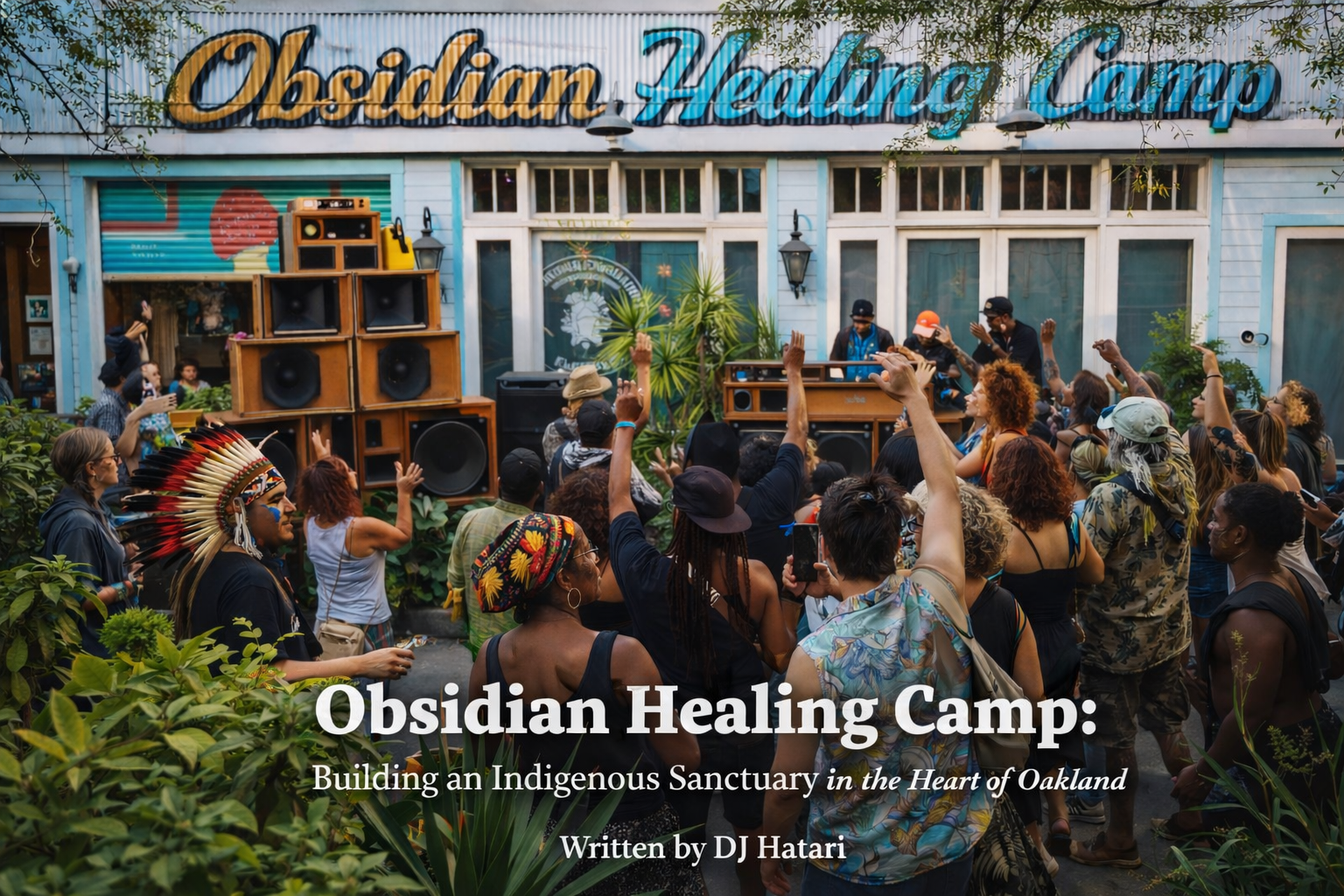
On a quiet stretch in Oakland, tucked behind an unassuming entrance, there is a space where reggae rhythms float through the air, herbs dry beside bookshelves, activists rest beside elders, and fire ceremonies burn beneath an open sky.
This is Obsidian Healing Camp.
More than a wellness center.
More than a community hub.
More than an activist refuge.
Obsidian Healing Camp is a living expression of what becomes possible when Indigenous values, community self-determination, and cultural resistance take physical form.
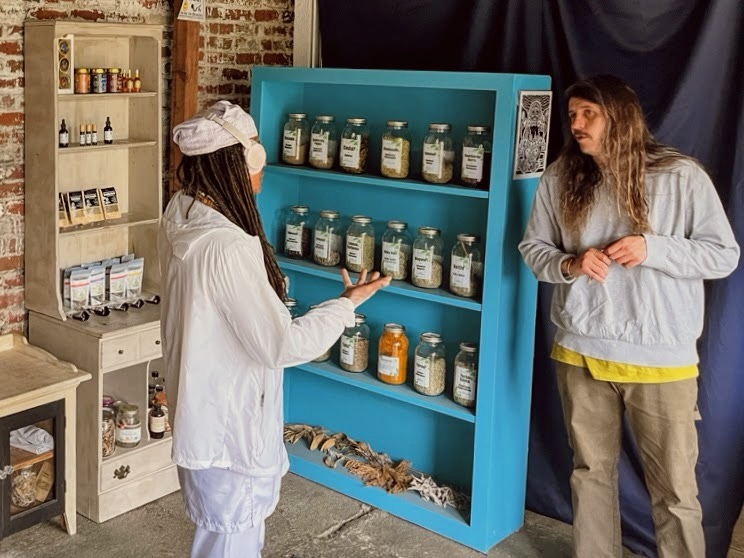
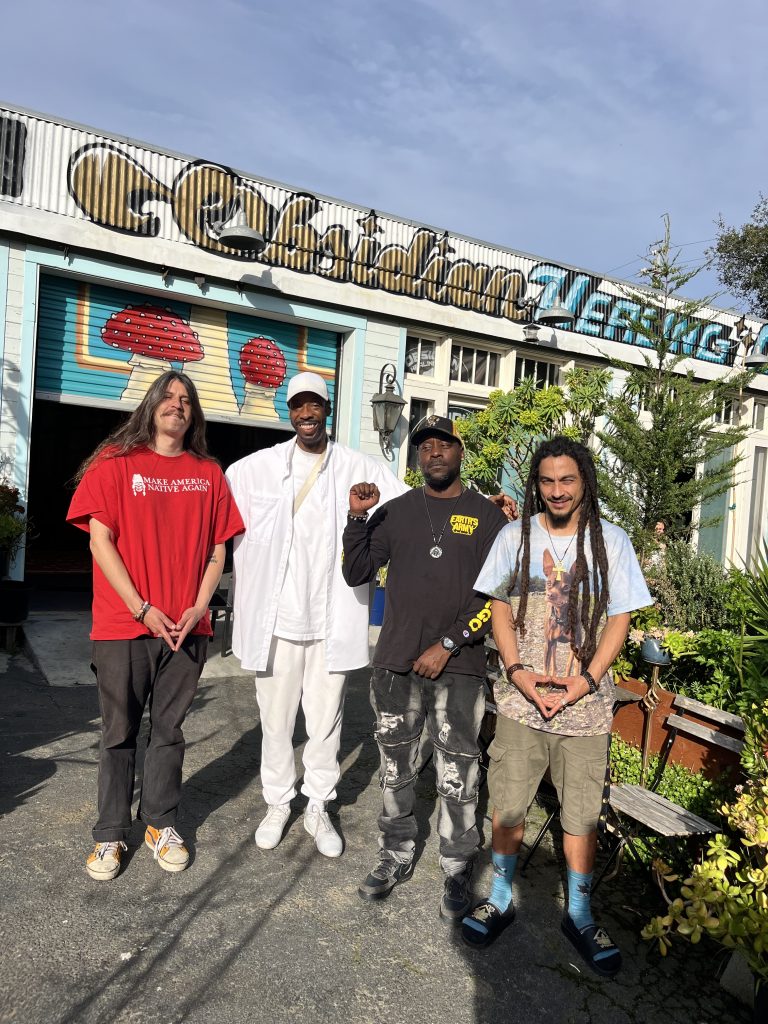
Reggae Cultural Movement recently sat down with co-founders Dre, Steven, and Val inside the camp itself. Reggae played in the yard during our conversation. The scent of herbs lingered in from the nearby apothecary. People moved in and out freely. No gatekeeping. No hierarchy. No sterile yoga studio atmosphere.
Just community.
And what became clear in that conversation is simple.
Obsidian is not just a place.
It is a response.
The Spark: From Standing Rock to Oakland
Obsidian Healing Camp did not begin as a business strategy.
It began as a question.
Three brethren sitting together, asking,
“How do we heal our people?”
The founders were shaped profoundly by the Standing Rock movement and years of frontline environmental activism. Many of us remember the brutality those water protectors endured as they stood against the pipeline. The founders witnessed that struggle up close. They saw the militarized response. They felt the exhaustion that followed.
They also witnessed what happens when organizers spend years fighting pipelines, ICE raids, land theft, and global injustice, only to return home depleted, burned out, and without access to restoration.
Steven explains,
“We needed a place to heal the frontliners. A lot of people fighting eco wars and social justice battles were burning out and sometimes going back to drugs and alcohol because there was nowhere to restore.”
The word camp was chosen with intention.
Indigenous communities have always formed camps with a purpose. War camps. Ceremonial camps. Protection camps. But rarely were there healing camps specifically dedicated to restoring those carrying the weight of resistance.
Obsidian was created to fill that void.
What began as an idea to rent a single room expanded the moment the founders saw the full property. The vision grew instantly. Instead of simply occupying space, they chose to steward it.
Not as landlords.
But as caretakers.
The property was transformed into a cooperative healing sanctuary funded not by grants or investors, but by sweat equity, shared labor, and collective belief.
No outside funding.
No nonprofit dependency.
Community built. Community sustained.
Why Obsidian
The name carries layered spiritual and political meaning.
Obsidian is volcanic glass, one of the most valuable minerals among First Nations across Turtle Island. It was traded widely among tribes. If you traveled with obsidian, you returned with something of value. Food. Tools. Trade. Sustenance.
It represents:
Exchange
Protection
Survival
Intertribal unity
Sacred reciprocity
Spiritually, obsidian is known as a grounding and balancing stone, associated with clarity and protection.
For the founders, the symbolism is direct.
If you come to Obsidian, you leave with something of value.
Healing.
Connection.
Clarity.
Purpose.
A Sanctuary for Indigenous and BIPOC Communities
One foundational pillar of Obsidian Healing Camp is non-negotiable.
Indigenous people receive free services.
This is not performative. It is structural.
The founders speak candidly about the erasure and marginalization Indigenous communities continue to face. The epidemic of missing Indigenous women. The generational trauma of colonization. The theft of land and cultural identity. These are not historical footnotes. They are present realities.
Val reflects,
“When I connected with my brethren Steven, I learned so much about what our brothers and sisters on the frontline have endured to protect Mother Earth. We are taught a lot of misinformation in school, so we have to learn from one another instead. We need to highlight those who are still connected to their tribe so they can guide us. When we allow ourselves to be led by Indigenous nations, we all have a chance to rediscover our own tribe.”
At the core of Obsidian’s philosophy is the Eagle and Condor Prophecy, a vision of reunification between the peoples of the North and South, restoring sacred balance and stewardship of the Earth.
This belief is operational, not symbolic.
It shapes their commitment to:
Stewardship of land
Resistance to extractive capitalism
Intertribal solidarity
Cultural preservation
Land-based spirituality
Steven explains,
“Humans are the only species that can either destroy the Earth or make her more beautiful. Colonizers thought they walked into the Garden of Eden. What they did not realize was it was generations of Indigenous people tending to the land.”
Obsidian exists as an invitation to return to that tending.
Healing as Cosmology
When asked what healing means within their worldview, the answer came without hesitation.
“All of the above.”
Healing is physical.
Healing is emotional.
Healing is spiritual.
Healing is political.
It cannot be fragmented.
At Obsidian, healing is not reduced to boutique wellness culture. It is a collective restoration grounded in accessibility.
Offerings include yoga, sound healing, Friday fire ceremonies, plant medicine, an apothecary, a food pantry, a library, a gym, movement classes, herbalism, tattoo work, a dance studio, a music studio, and a Red Market featuring Indigenous and local artisans.
The Red Market operates on cooperative principles. Vendors are not burdened with high upfront costs. Instead, percentage-based arrangements make participation possible for emerging healers and creators.
The structure removes fear from entry.
It removes gatekeeping from creativity.
It keeps healing economically accessible.
A Third Space Beyond Alcohol Culture
Obsidian functions as a third space, as sociologists describe it. Not home. Not work. A cultural commons.
While plant medicine and cannabis are respected, the environment offers an alternative to alcohol centered social culture.
Those who pass through Obsidian’s doors represent the full spectrum of Oakland.
Unhoused neighbors.
Veterans.
Lawyers.
Artists.
Organizers.
Youth currently 18 and older.
Elders.
Dre articulates the atmosphere clearly,
“We wanted it to feel like culture, not sterile, not corporate. A place where artists, healers, musicians, and organizers could all exist together. It came from us. Nobody above us is telling us what to do. We built it because we needed it.”
That absence of hierarchy is intentional.
Safety is upheld through clear community guidelines, enthusiastic consent, accountability conversations, and collective responsibility.
The energy is welcoming yet principled.
Warm yet structured.
Reggae as Spiritual Infrastructure
During our visit, reggae filled the yard.
Not as background noise.
As a foundation.
Steven says,
“It is everything. Reggae is healing. It is revolutionary. It aligns with our spirit.”
Roots reggae’s messages of liberation, herbal wisdom, unity, and resistance echo naturally within Obsidian’s mission.
The camp hosts roots DJs, live reggae artists, drum circles, ceremony music, breathwork sessions with musicians, and performances from artists such as Illuminati Congo.
While Obsidian does not specifically center Rastafari theology, they express gratitude for its spiritual contributions and recognize reggae’s cultural and political power.
The shared values are unmistakable.
Community unity.
Sacred herb respect.
Resistance to oppressive systems.
Cultural pride.
Liberation through art.
Healing through vibration.
Reggae is not aesthetic here.
It is infrastructure.
The One Year Anniversary: April 4th, 2026
On April 4th, 2026, Obsidian Healing Camp celebrates its one-year anniversary, and Reggae Cultural Movement is honored to collaborate in this milestone gathering.
This event will be free to the community and rooted in healing, music, and celebration.
Featuring live performances, including Illuminati Congo; Indigenous vendors; healers; workshops; ceremony; and collective fellowship, the anniversary represents more than survival.
It represents proof.
In just one year, without grants, investors, or corporate sponsorship, Obsidian has become a fixture in Oakland’s healing landscape.
This partnership reflects the Reggae Cultural Movement’s mission in action, using reggae as a cultural tool to uplift and strengthen real community infrastructure.
We invite the Bay Area and beyond to attend, support, and witness what grassroots healing looks like when it is community-owned.
A Model for the Future
When asked about their five-year vision, the founders spoke with clarity.
They want Obsidian to become a sustainable economic and healing base. A replicable model. A formula that other communities can adapt.
Dre summarizes,
“I feel like this can be a model. A space with a library, studio, apothecary, free food, and workshops all in one place. If we can do this here without funding, it shows other communities they can do it too.”
Their vision includes expanded healer networks, youth inclusion pathways, economic opportunity for artisans, stronger Indigenous education presence, deeper land stewardship, and continued independence from outside control.
Their current needs are simple.
Volunteers.
Herbalists.
Healers.
Practitioners.
Media amplification.
Community participation.
Above all, they want people to show up.
Open daily from 9 AM to 9 PM.
Their message is direct.
“Just pull up.”
Reggae as Living Ceremony
Obsidian Healing Camp demonstrates something essential.
Healing cannot be outsourced.
Community cannot be franchised.
Culture cannot be commodified without losing its spirit.
Indigenous values are not relics. They are blueprints.
Reggae is not just music. It is medicine.
Cooperative economics are viable.
Activists deserve restoration.
Oakland deserves sacred space.
In many ways, Obsidian embodies what reggae has long declared.
Zion within Babylon.
Fire for purification.
Herb for healing.
Community for survival.
Music for unity.
For this reason, Reggae Cultural Movement is proud to collaborate with Obsidian Healing Camp.
They are not just playing reggae.
They are living its principles.
The Reggae Cultural Movement was created to use music as a cultural tool for healing, organizing, and empowerment. Obsidian is already doing that work on the ground. This collaboration is not symbolic. It is aligned.
Together, we are building bridges between sound system culture and Indigenous healing spaces, between DJs and herbalists, between artists and organizers.
This collaboration will take form through live reggae gatherings, holistic wellness spaces, healer and herbalist networking, artist showcases, and shared storytelling that uplifts community-led healing.
And on April 4th, 2026, that alignment becomes visible.
Obsidian Healing Camp will celebrate its one-year anniversary, and Reggae Cultural Movement will stand beside them in music and spirit. The gathering will feature live reggae vibrations, including Illuminati Congo, Indigenous vendors and healers, ceremony, fellowship, and a unified community presence.
This is more than an anniversary.
It is proof of concept.
One year.
No corporate backing.
No outside funding.
Just community.
April 4th is not simply a date.
It is a declaration that grassroots healing works.
When music meets medicine, community strengthens.
This is alignment.
And alignment is powerful.
This is living reggae culture.
Not just speakers and stage lights.
But land, fire, herbs, books, drums, elders, youth, and shared responsibility.
Obsidian Healing Camp is not a trend.
It is a seed.
And it is growing.
One Movement. One Culture. One Love.
Written by DJ Hatari
Reggae Cultural Movement


One Response
One love!!!