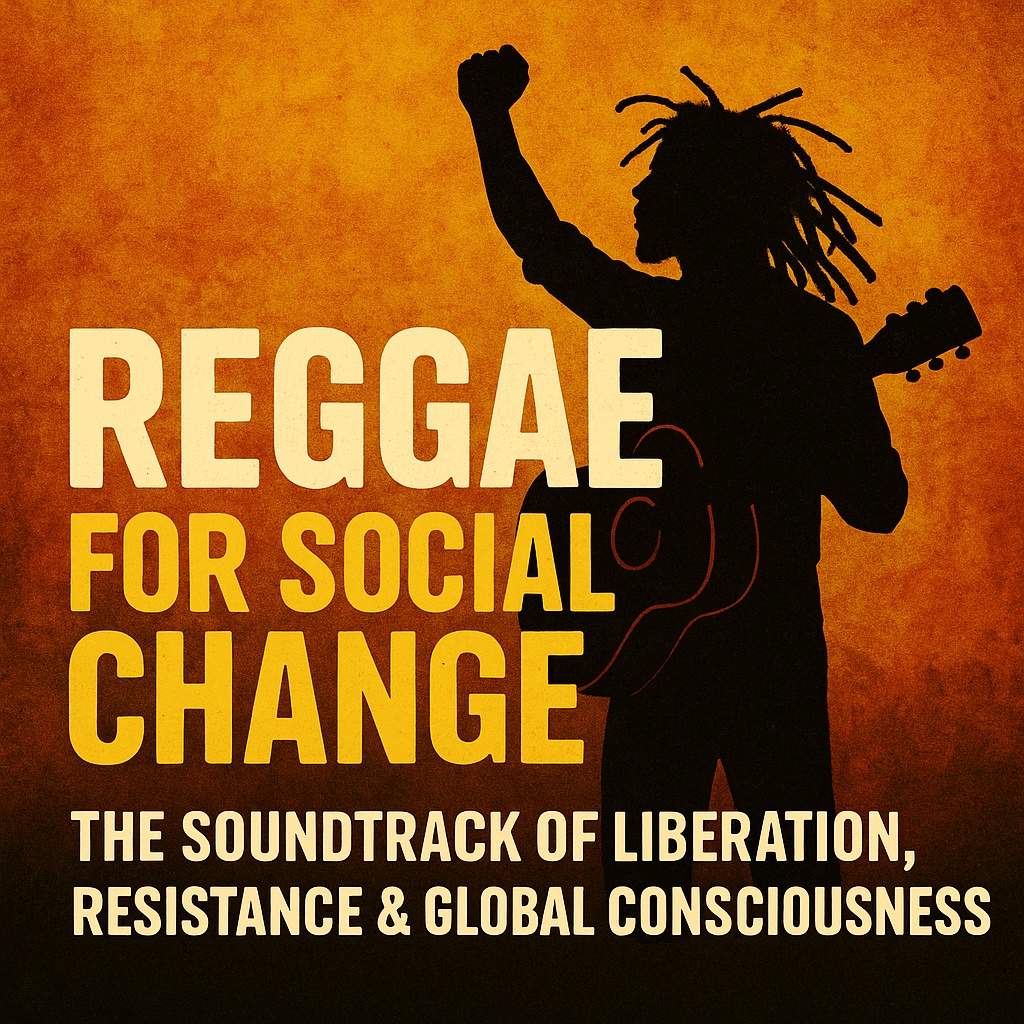
Reggae for Social Change: The Soundtrack of Liberation, Resistance & Global Consciousness
Written by DJ Hatari
Reggae Cultural Movement – Social Justice & Culture Section
From its earliest vibrations rising from the heart of Jamaica to its influence echoed across continents today, reggae music has stood as a powerful tool for social change. More than entertainment, reggae is a spiritual force, a cultural expression, and a global movement rooted in justice, unity, and liberation.
Across decades, reggae has amplified the voices of the oppressed, supported global freedom struggles, and shaped the consciousness of generations dedicated to building a more equitable world. This article explores reggae’s powerful legacy of activism—its origins, its global impact, and the modern artists and movements carrying its message forward.
1. Origins of Resistance: Reggae as the Voice of the People
Reggae emerged in the late 1960s as Jamaica was grappling with independence, economic hardship, and social tension. Out of these conditions, reggae became the soundtrack for a people navigating inequality, political violence, and the search for identity.
Drawing from ska, rocksteady, African rhythms, Rastafari spirituality, and the lived experiences of Jamaica’s working class, reggae was never just music—it was a message.
A Reflection of Reality
Early reggae artists sang about:
- Social inequality
- Poverty and unemployment
- Police violence
- Political corruption
- Spiritual awakening
- African identity and Black liberation
This deep consciousness transformed reggae into a cultural voice for the marginalized. Lyrics were not sanitized for commercial appeal; they exposed uncomfortable truths and demanded accountability.
Bob Marley, whose music became an international symbol of unity and freedom, once said:
“My music will go on forever. Maybe it’s a fool say that, but when me know facts me can say facts. My music will go on forever.”
That confidence was rooted in reggae’s mission—uplift the people and challenge oppressive systems.
2. Reggae & Global Liberation Movements
Reggae quickly transcended Jamaica’s borders because its message resonated universally. Around the world, oppressed peoples recognized themselves in the music’s call for freedom and justice.
Zimbabwe: Reggae as an Independence Anthem
When Zimbabwe gained independence in 1980, Bob Marley was invited as the soundtrack to liberation. His song “Zimbabwe” became an anthem for revolutionaries resisting colonial rule. Performing at the Independence Day celebration, Marley stood as a musical embodiment of solidarity with African liberation movements.
South Africa: A Soundtrack to End Apartheid
During apartheid, reggae circulated underground and became a secret weapon of hope for South African youth. Songs like:
- “War”
- “Get Up, Stand Up”
- “Africa Unite”
spoke directly to the struggle against racial segregation.
Reggae transcended entertainment—it became a coded language of resistance.
The Caribbean & Pan-African Consciousness
Throughout the Caribbean, reggae fueled movements advocating for:
- Worker rights
- Cultural pride
- Black self-determination
- Youth empowerment
In Trinidad, Dominica, Grenada, and beyond, reggae stood arm in arm with educators, activists, and political leaders pushing back against neocolonialism and inequality.
Latin America & Indigenous Struggles
From Brazil to Mexico, reggae took root within Indigenous and Afro-descendant communities. Bands and activists used reggae to uplift:
- Land rights struggles
- Anti-police violence campaigns
- Anti-colonial education movements
Reggae’s universal message of justice transcended language and geography.
Europe, Asia & Global Youth Movements
In Europe, reggae influenced anti-racist activism, immigrant rights campaigns, and urban youth movements. Across Japan, the Philippines, and Polynesia, reggae culture merged with local traditions, creating new expressions of resistance and community.
Wherever people yearned for justice, reggae found a home.
3. Reggae’s Stand Against Racism and Oppression
Reggae’s core philosophy rejects all forms of racism, inequality, and human exploitation. It is deeply tied to Rastafari consciousness, which affirms the sacredness of African identity and calls for the dismantling of oppressive systems—what the culture refers to as Babylon.
Themes Central to Reggae Activism:
- Equal rights & justice
- Black liberation & African pride
- Spiritual freedom & mental emancipation
- Anti-colonialism & anti-imperialism
- Human dignity & unity
Songs like Peter Tosh’s “Equal Rights,” Culture’s “Two Sevens Clash,” and Burning Spear’s “Marcus Garvey” remain timeless not only for their musical brilliance but for their profound political and cultural impact.
Reggae serves as both a critique of oppression and a blueprint for liberation. It reminds listeners that the fight for justice is global and spiritual—not limited to any one region, faith, or ethnicity.
4. The New Era: Contemporary Reggae Activism
While the pioneers laid the foundation, the flame of reggae activism continues to burn through a new generation of artists deeply committed to consciousness, justice, and cultural preservation.
Chronixx
Chronixx champions youth empowerment, African identity, and environmental stewardship, reviving roots reggae energy with modern clarity.
Protoje
Known for his revolutionary lyricism, Protoje addresses political corruption, economic inequality, and the importance of cultural memory.
Koffee
Koffee brings youthful optimism while uplifting messages of unity, self-love, and resilience. As a woman rising in a male-dominated space, her success itself challenges societal norms.
Jah9
A poet and practitioner of holistic wellness, Jah9 bridges reggae with Afrikan healing traditions, feminism, and spiritual empowerment.
Kabaka Pyramid
Kabaka uses sharp lyricism to question systemic injustice, advocate mindfulness, and challenge mental enslavement.
Together, these artists demonstrate that reggae activism is not just a relic of the past—it is a living force evolving with the times.
5. Reggae Culture & Social Justice: A Deep and Lasting Connection
Reggae’s relationship with social justice is woven into its DNA. The music cannot be separated from the cultural, spiritual, and political movements that birthed it.
Why Reggae Has Enduring Activist Power:
- It speaks truth to power
- It unifies people across borders
- It preserves the stories of the oppressed
- It inspires courage, faith, and community action
- It provides a spiritual framework for liberation
Reggae has also influenced social justice through:
- Grassroots organizing
- Community wellness practices
- Cultural education
- Youth programs
- Global festivals promoting peace and unity
This is why UNESCO recognized reggae as an Intangible Cultural Heritage of Humanity—not just for the music, but for its profound cultural and humanitarian impact.
6. Reggae as a Catalyst for Modern Social Movements
Reggae continues to inspire the world’s justice movements, including:
- Black Lives Matter
- Environmental justice campaigns
- Anti-war efforts
- Women’s empowerment movements
- Indigenous land rights activism
- Global youth organizing
The music’s messages remain timeless because the struggles they address still persist. Reggae provides a sense of unity, grounding, and clarity for activists worldwide.
Even outside traditional reggae spaces, the culture influences fashion, health, spiritual practices, and digital activism—extending its reach far beyond the stage.
Conclusion: The Unwavering Spirit of Reggae Activism
Reggae has always been a movement of truth, freedom, and consciousness. From Trenchtown’s humble yards to global arenas, it carries the heartbeat of a people determined to rise above oppression and reclaim their humanity.
Today, reggae’s mission continues—through artists, activists, educators, holistic healers, and cultural movements like ours.
Reggae is not simply a genre.
It is a global liberation force.
It is a spiritual bridge between cultures.
It is the eternal voice of the people.
As long as injustice remains, reggae will continue to uplift, resist, and inspire a better world.

